

National Plant Genetic Resources Centre

Overall Objective

The Crop genebank collects, conserves, and manages seed, tissues, and living plants to safeguard the genetic diversity that underpins today’s food systems and tomorrow’s breakthroughs. Established in 1989, Zambia’s NPGRC preserves 7,000 accessions across 49 crop species vital to national agriculture—including cereals, legumes, oil crops, African leafy vegetables, root and tuber crops—and crop wild relatives (e.g., rice, sorghum). Materials are conserved according to biology: orthodox seeds are dried, viability-tested, and stored long-term at −18 °C with periodic regeneration, while vegetatively propagated crops such as cassava and sweetpotato are kept in field genebanks. The centre also collects new diversity through field missions, documents passport and characterisation data in a curated database, and undertakes safety-duplication and quality management to international genebank standards. Access is provided to researchers, breeders, and education partners under national guidelines and standard material transfer agreements, with support for evaluation, pre-breeding, and farmer outreach (e.g., community seed activities and training). 

By conserving diversity and enabling its responsible use, the NPGRC supplies the raw materials needed to develop resilient, productive, and nutritious crops supporting food security, farmer livelihoods, and sustainable agricultural development under a changing climate.

What we do

Inventory & Collection of Plant Genetic Resources

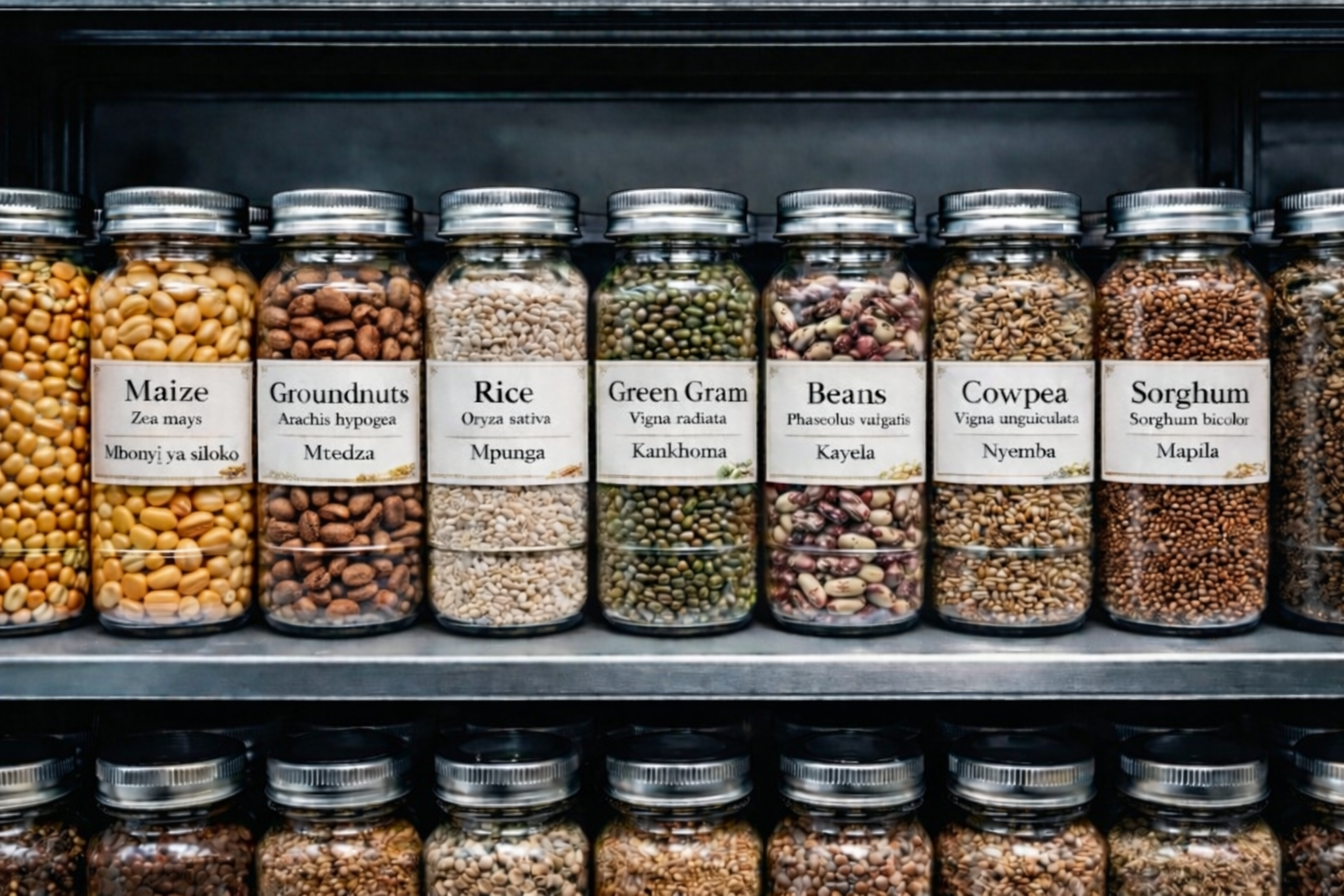
The programme has collected a wide range of plant genetic resources, including major crops such as maize, sorghum, millets, rice, finger millet, pearl millet, cowpea, beans, Bambara nuts, and groundnut. Collections also cover important root and tuber crops like cassava and sweet potato, as well as indigenous and local vegetable species.

Conservation of the collected crop/plant material

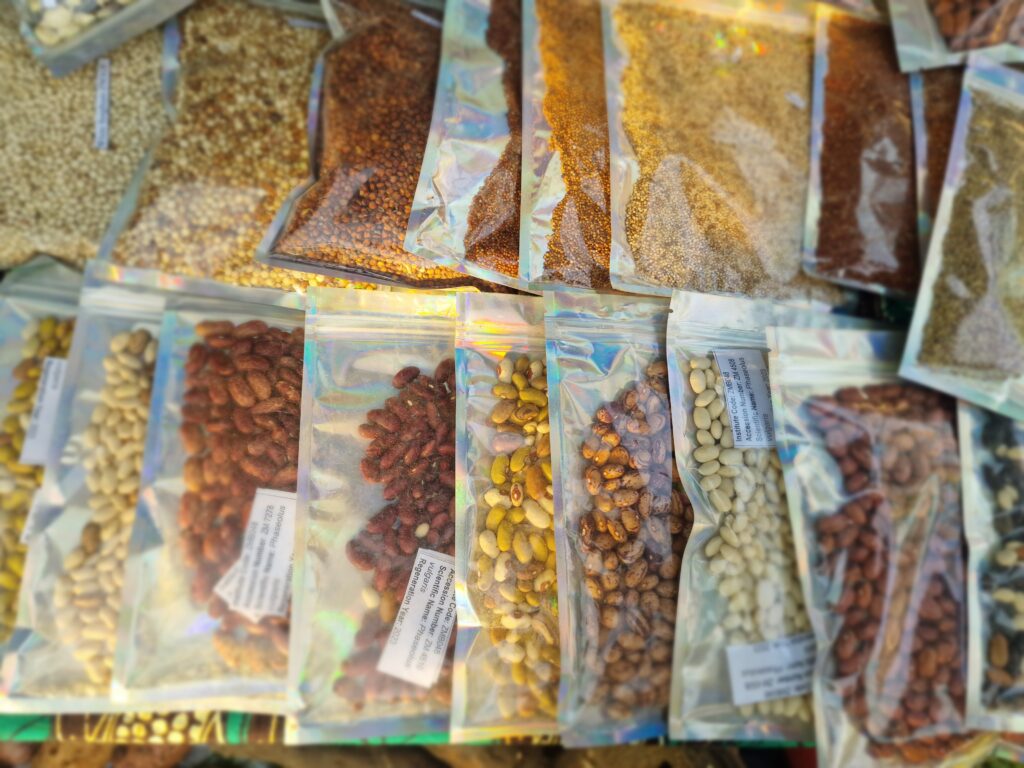
The National Plant Genetic Resources Centre conserves plant genetic resources mainly through ex situ methods, which involve preserving material outside its natural environment for long-term security. This includes storing seed samples and maintaining living collections of crops such as cassava, sweet potato, and the Livingstone potato. Seeds are dried to below 8% moisture and stored at –20°C in hermetically sealed aluminium foil bags. Germination tests are conducted regularly to track viability, and regeneration is done when germination falls below 85%, particularly for oilseed crops that often require renewal every 3–5 years.

Characterisation & Evaluation

The National Plant Genetic Resources Centre provides descriptive information on highly heritable traits within germplasm collections, using morpho-phenotypic data obtained from growing plants. Evaluation focuses on agronomically important traits such as yield, stress tolerance, and disease resistance, generating information that directly supports breeders and other end users in selecting and developing improved varieties.

Multiplication & Regeneration

Multiplication and regeneration are carried out when the seed quantity of germplasm accessions falls below the minimum storage threshold or when seed viability drops below the required germination level, typically 85% for most crops. Some species—such as vegetables, oil crops, and grasses—may have lower viability requirements. These activities are essential for increasing seed quantity and restoring seed quality, ensuring the long-term maintenance and genetic integrity of conserved germplasm accessions.

Documentation

Plant genetic resources are supported by extensive data and information that enable their efficient use. This information is generated or collected through activities such as inventories, germplasm collection, multiplication and regeneration, routine management, and characterisation and evaluation. Proper documentation ensures that each accession is well-tracked, understood, and accessible for research, breeding, and other applications.

Latest News on Farming Systems Research