Food Legumes Improvement Programme

Overall Objective

The programme focuses on developing improved food legume varieties that combine high yield potential with early maturity and strong tolerance to drought, heat, and major pests and diseases. Breeding efforts also target traits that respond to farmer, consumer, and market preferences, including seed size and colour, taste, shorter cooking time, and enhanced nutritional quality such as higher protein, iron, and zinc content. Reliable nodulation for effective biological nitrogen fixation is prioritised to improve soil fertility and reduce dependence on inorganic fertilisers.

Candidate lines are evaluated across multiple locations and seasons to ensure yield stability, adaptability, and performance under diverse production conditions before release. Each released variety is supported by a simple, farmer-friendly agronomy package covering planting windows, spacing, fertiliser and lime requirements, inoculant use where relevant, and integrated pest management practices.

The programme works closely with seed companies, farmer cooperatives, and extension services to multiply breeder and foundation seed into certified seed, establish demonstration plots and field days, and gather farmer feedback. This approach ensures that improved varieties are rapidly scaled, widely adopted, and perform reliably on farmers’ fields.


At implementation level, the programme covers key food legumes commonly grown in Zambia—common bean, cowpea, and groundnut.

Our Work

Bean Breeding Programme

The programme prioritises high and stable yields, early maturity, and resistance to key diseases and insect pests that commonly reduce productivity. Strong emphasis is placed on grain quality traits such as seed size, colour, and shorter cooking time to meet consumer and market preferences. Nutritional improvement is a core breeding objective, with particular focus on enhanced protein, iron, zinc, fibre, and essential amino acids, supporting improved household nutrition and use in institutional programmes such as school feeding. Some of the key outputs from this programme include the varieties Chambeshi, Lukupa, Lyambai, and Kabalangeti, which combine good agronomic performance with preferred grain quality and improved nutritional attributes. These varieties are well suited to both smallholder production systems and market-oriented bean value chains across Zambia.

Cowpea Breeding Programme

The cowpea programme targets robust varieties suited to hot, drought-prone environments and low-input farming systems. Breeding focuses on early maturity, drought and heat tolerance, and resistance to major pests and diseases that affect both field production and storage. Dual-purpose traits—good grain yield alongside usable fodder—are considered to support mixed crop–livestock systems and improve overall farm productivity.

Groundnut Breeding Programme

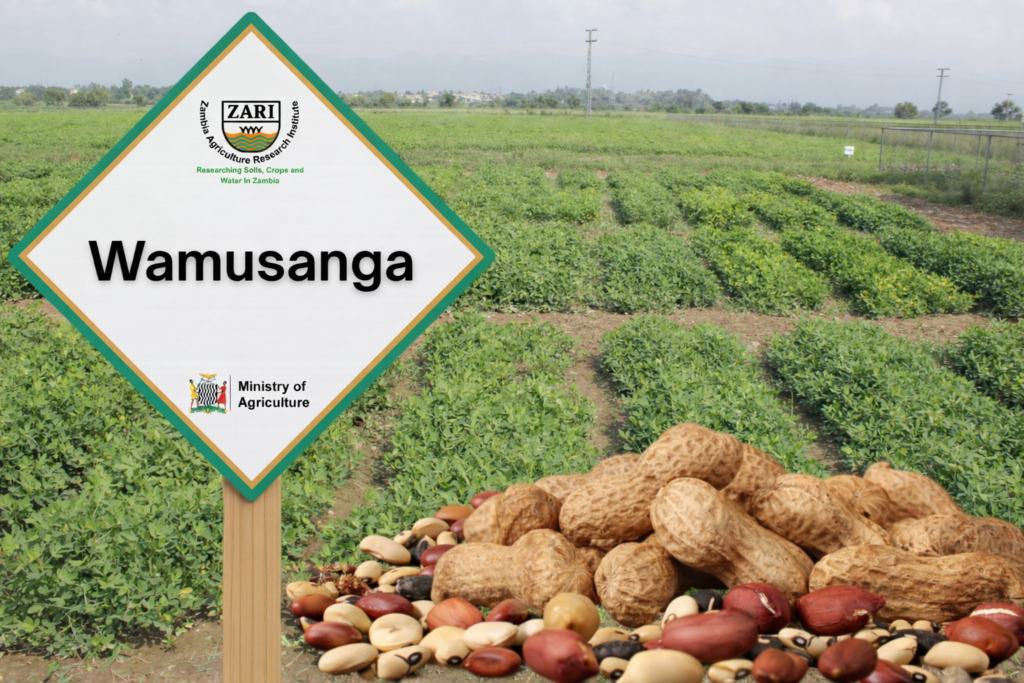
The groundnut programme concentrates on developing high-yielding varieties with good oil and confectionery quality, early maturity, and tolerance to drought and common diseases. Breeding also emphasises uniform pod and seed size, good shelling percentage, and traits that improve marketability and processing. Food safety considerations, including resistance to diseases associated with aflatoxin risk, are increasingly integrated to meet domestic and export market standards.

Latest News on Farming Systems Research

What we do